
Why Your Business Can’t Afford Amateur Design Anymore
Every day, thousands of potential customers make split-second judgments about businesses based solely on visual design. Research from Stanford’s Web Credibility Project reveals that 75% of users admit to making judgments about a company’s credibility based on their website’s design alone. Yet countless businesses continue investing in marketing while neglecting the visual foundation that makes or breaks first impressions.
Poor design doesn’t just look unprofessional—it actively costs you money. From lost sales and diminished brand value to wasted advertising spend and customer churn, bad design creates a silent drain on your business that most entrepreneurs never fully calculate. Understanding these hidden costs is the first step toward fixing them.
The Immediate Revenue Impact of Poor Design
Lost Sales from Untrustworthy Visuals
When potential customers land on a poorly designed website or see amateur social media graphics, their brains make instant credibility assessments. A University of Melbourne study found that it takes only 50 milliseconds for users to form an opinion about your website—that’s one-twentieth of a second.
During this microsecond evaluation, poor design triggers warning signals: outdated layouts suggest the business isn’t current, inconsistent branding implies lack of attention to detail, amateur graphics indicate the company might not be legitimate, and cluttered interfaces create confusion and frustration.
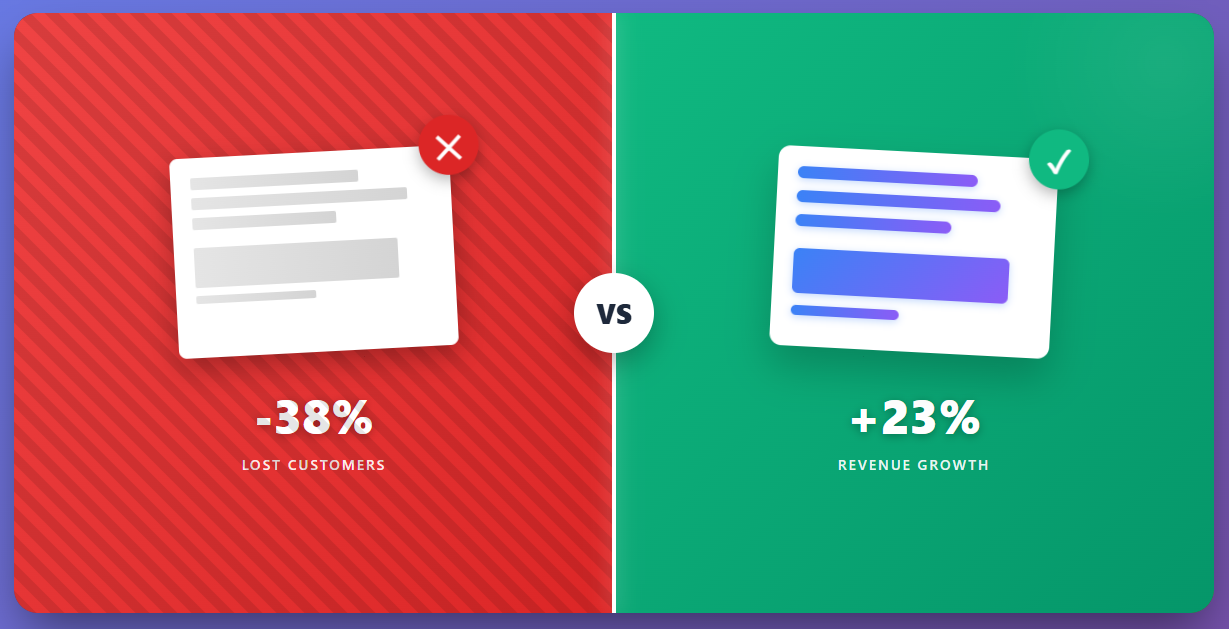
These snap judgments happen unconsciously, but they have real consequences. Research by Adobe indicates that 38% of people will stop engaging with a website if the content or layout is unattractive. For an e-commerce site generating $50,000 monthly, losing 38% of potential customers means $19,000 in lost revenue every single month—$228,000 annually.
Higher Customer Acquisition Costs
Poor design makes your marketing work harder and cost more. When your visual identity fails to clearly communicate value, you need more touchpoints to convince prospects. This extends your sales cycle and increases acquisition costs across every channel.
Consider Facebook advertising: ads with professional, eye-catching design achieve click-through rates 2-3 times higher than amateur designs. If you’re spending $5,000 monthly on ads with a 1% CTR due to poor creative, improving design could potentially triple that to 3% CTR, meaning the same budget delivers three times the traffic.
The math is stark. Poor design means paying more to reach fewer people, then converting a smaller percentage of those you do reach. Meanwhile, competitors with professional design capture market share using the same advertising budget more efficiently.
Pricing Power and Perceived Value
Design directly influences how much customers are willing to pay. Apple charges premium prices partly because exceptional design communicates quality, innovation, and attention to detail. The physical product may not cost more to manufacture, but design creates perceived value that justifies higher pricing.
Businesses with amateur design face the opposite problem—they must compete on price because their visuals don’t justify premium positioning. A consultant with a professionally designed website and materials can charge $300 per hour, while equally qualified consultants with amateur design struggle to command $150 per hour. The difference isn’t expertise; it’s perceived value created by design.
This pricing pressure compounds over time. Lower prices mean smaller margins, less budget for growth, and difficulty investing in quality—including better design—creating a downward spiral.
The Long-Term Brand Damage
Inconsistent Brand Identity Erodes Recognition
Brand recognition drives business value, but inconsistency destroys it. When your logo appears in different versions across materials, your social media uses mismatched colors, your website’s style contradicts your business cards, and your presentations lack cohesive branding, customers fail to build strong brand associations.
Recognition requires repetition of consistent visual elements. Every time customers see inconsistent branding, they essentially encounter a “different” business, resetting the recognition-building process. Companies with consistent brand presentation across platforms see revenue increases of up to 23% according to Lucidpress research.
Inconsistency also suggests internal chaos. Customers wonder: if this company can’t maintain visual consistency, can they maintain product quality? Service reliability? Professional standards?
Losing Ground to Competitors
While you struggle with amateur design, competitors with professional visuals capture mindshare. In saturated markets, businesses with superior design increasingly dominate because they communicate value more effectively.
This competitive disadvantage accelerates over time. As competitors build brand recognition through consistent professional design, breaking through becomes progressively harder and more expensive. Eventually, market perception solidifies: your competitors are the “real” players; you’re the budget alternative.
Employee Morale and Recruitment Challenges
External audiences aren’t the only ones affected by poor design. Employees take pride in representing companies with professional branding. Conversely, they feel embarrassed sharing amateur marketing materials with prospects or displaying unprofessional business cards.
This impacts recruitment too. Top talent evaluates potential employers partly through digital presence. A poorly designed careers page, unprofessional social media, or dated visual identity suggests the company lacks resources or doesn’t value quality—red flags for ambitious candidates.
The Hidden Operational Costs
Wasted Marketing Budget
Every dollar spent promoting your business through ads, content, or events gets filtered through your design. Poor design acts like a leak in your marketing funnel—no matter how much you pour in, a significant percentage drains away before reaching conversion.
Consider email marketing: professionally designed emails achieve open rates 15-20% higher than plain text or poorly designed alternatives, and click rates can be 50-100% higher. If you send 10,000 promotional emails monthly, better design could mean 1,500 more opens and 500 more clicks—translating directly to sales opportunities.
The same applies across channels. Poorly designed social posts get less engagement, reducing organic reach and forcing you to pay for visibility. Amateur print materials get discarded rather than kept. Unprofessional trade show displays fail to attract booth traffic despite expensive event fees.
Productivity Drain from Design Chaos
Without professional design systems, your team wastes time on visual tasks they’re unqualified for. Marketing managers spend hours in Canva trying to create passable graphics. Sales teams delay proposals while attempting to format presentations. Everyone becomes an amateur designer, delivering subpar results slowly.
This hidden productivity cost compounds. A marketing manager earning $75,000 annually who spends 10 hours weekly on design tasks—tasks a design subscription could handle—represents $36,000 in annual cost for work that often still looks unprofessional.
The Revision and Rework Spiral
When businesses use freelancers or generic templates, they often face endless revision cycles. Freelancers misunderstand briefs, templates don’t quite fit needs, and DIY attempts require multiple redos. Each revision cycle delays campaigns, misses market timing, and consumes management attention.
These delays carry opportunity costs. Launching a campaign one month late means one month of lost revenue. Missing seasonal trends because design took too long means lost market opportunities that won’t return until next year.
How This Impacts Different Business Types
E-commerce and Retail
Online stores live or die by visual design. Product photography, category layouts, checkout flow design, promotional banners—every element influences conversion rates. Research by BigCommerce shows that 67% of consumers say image quality is “very important” in selecting and purchasing products.
Poor e-commerce design creates specific problems: shoppers can’t visualize products clearly, inconsistent styling reduces trust in product quality, confusing navigation makes finding products difficult, amateur promotional graphics fail to drive urgency, and unclear calls-to-action reduce conversion rates.
An e-commerce business generating $1 million annually with a 2% conversion rate could potentially reach 3% with professional design improvements—that’s $500,000 in additional revenue.
Professional Services and B2B
Service businesses sell intangibles—expertise, reliability, results. Without physical products, design becomes your primary tangibility signal. Consultants, agencies, law firms, and B2B companies need design to communicate competence.
Poor design tells potential clients: if you can’t manage your own presentation, how can you manage our account? In high-value B2B sales where contracts reach six or seven figures, decision-makers eliminate vendors based on unprofessional appearance before ever discussing capabilities.
The cost here isn’t just lost deals—it’s lost opportunities to even compete. You never make the shortlist, never get the RFP, never earn consideration alongside the “serious” players with professional design.
Startups and Growth Companies
Early-stage companies often deprioritize design to conserve resources, but this creates a catch-22. Weak design makes fundraising harder—investors judge startups partly on professionalism and market-readiness, which design communicates. It makes customer acquisition more expensive, stretching limited budgets further. It complicates partnership discussions with established companies that expect visual parity.
Startups can’t afford elaborate design budgets, but they also can’t afford amateur visuals. The businesses that break through typically find efficient ways to access professional design early, recognizing it as infrastructure rather than luxury.
Content Creators and Personal Brands
Influencers, educators, and thought leaders compete for attention in oversaturated markets. Professional visual branding separates credible authorities from hobbyists. Poor design limits monetization through lower sponsorship rates, reduced course sales, fewer speaking opportunities, and diminished authority positioning.
A YouTuber with 100,000 subscribers but amateur thumbnails and channel branding might earn $30,000 annually from sponsorships. Another creator with the same audience but professional branding could command $60,000-80,000 because they present as a legitimate media property rather than a hobbyist.
Calculating Your Actual Design Cost
Most businesses underestimate design’s impact because they never calculate the true cost of poor visuals. Here’s how to estimate what bad design actually costs your business:
Website Conversion Impact
Calculate monthly website traffic, then multiply by your current conversion rate to get actual conversions. Research your industry’s average conversion rates with professional design—typically 50-100% higher than amateur sites. Calculate the revenue difference between your current conversions and the professional benchmark. That gap represents your monthly cost of poor website design.
Social Media Engagement Loss
Review your social media engagement rates (likes, comments, shares per post). Compare to industry benchmarks for professionally designed content—usually 3-5x higher. Calculate the reach and conversions you’re missing. Each lost engagement represents lost brand exposure and potential customers.
Advertising Efficiency
Analyze your cost per click and cost per acquisition across paid channels. Industry data shows professionally designed ads typically achieve 2-3x better click-through rates. Calculate what you could save in ad spend while reaching the same audience with better creative.
Sales Cycle Length
Track how long it takes to close deals. Poor design typically extends sales cycles as prospects need more convincing. Each additional week in the sales cycle delays revenue and reduces your sales team’s capacity. Calculate the revenue impact of accelerating deals by 20-30% through improved credibility signaling.
Customer Lifetime Value
Customers acquired through professional channels (strong brand, clear value communication) typically show higher lifetime value—they understand what they’re buying and have appropriate expectations. Amateur design often attracts price-shoppers with higher churn. Calculate the lifetime value difference between your current customer acquisition and retention versus optimized scenarios.
The Psychological Impact of Design
Beyond measurable metrics, design affects how people feel about your business at a deeper psychological level:
Trust and Credibility Signals
Human brains evolved to make rapid threat assessments. In business contexts, visual design serves as a shorthand credibility check. Professional design signals: established business with resources, attention to quality and detail, understanding of modern standards, and investment in customer experience.
Amateur design triggers the opposite associations: possibly temporary or unstable business, lack of resources or commitment, behind on industry trends, and may not deliver professional results.
Emotional Resonance and Memory
Design creates emotional responses that influence decision-making more than rational evaluation. Colors trigger specific feelings—trust (blue), excitement (red), premium quality (black and gold), approachability (warm tones). Typography communicates personality—modern, traditional, playful, serious.
When design elements align with your brand promise, they create congruent experiences that feel “right” and become memorable. Misaligned or amateur design creates cognitive dissonance—something feels off—reducing memorability and emotional connection.
Decision Fatigue Reduction
Professional design makes decisions easier for prospects by clearly communicating information hierarchy, guiding attention to important elements, reducing visual clutter, and creating intuitive navigation paths. Amateur design does the opposite—everything competes for attention, important information gets buried, and navigation requires effort.
Since decision-making consumes mental energy, difficult-to-parse design creates fatigue that leads prospects to simply leave rather than work to understand your offering.
Making the Shift to Professional Design
Understanding design’s cost is step one. Step two is fixing it efficiently:
Audit Your Current Visual Presence
Systematically evaluate your design across touchpoints: website user experience and visual appeal, social media consistency and professionalism, marketing materials from emails to ads, sales collateral including presentations and proposals, physical materials like business cards and signage, and competitor comparison.
Be brutally honest. Better yet, ask trusted customers or advisors for candid feedback. The gaps you identify represent your biggest opportunities.
Prioritize Based on Impact
Not all design fixes deliver equal value. Prioritize based on traffic and visibility (fix what prospects see most), conversion points (optimize where decisions happen), and quick wins (high-impact changes that don’t require complete overhauls).
Typically, this means focusing first on your website homepage and key landing pages, social media profile and most frequent post types, primary marketing materials (email templates, ad creative), and sales presentations and proposals.
Calculate ROI of Design Investment
Professional design isn’t free, but it’s almost always profitable. Calculate the cost of design services (subscription, freelancer, or hire), estimate conservative improvement percentages (1-2% conversion increase, 20% better engagement, 15% shorter sales cycle), and project the revenue impact over 12 months.
Most businesses find that professional design pays for itself within 2-4 months through improved conversion rates alone, even before factoring in reduced advertising waste, faster sales cycles, and premium pricing power.
Implement Systematically
Don’t try to fix everything simultaneously. Implement professional design progressively: establish core brand guidelines first, update highest-traffic touchpoints, create templates for common needs, build a library of reusable assets, and continuously refine based on performance.
This phased approach delivers quick wins while building toward comprehensive visual consistency.
Beyond Aesthetics: Design as Business Strategy
Professional design isn’t about making things pretty—it’s about making business strategy visible and actionable. Every design decision should support business objectives: building trust, communicating value, differentiating from competitors, guiding customer actions, and reinforcing brand positioning.
When design aligns with strategy, it becomes a multiplier that makes every other business investment more effective. Marketing reaches further, sales close faster, pricing power increases, and customer loyalty strengthens. The compound effect over time dramatically impacts business value.
Conversely, poor design acts as a drag coefficient—no matter how good your product, service, or team, amateur visuals slow growth and limit potential.
The Cost of Waiting
The longer you operate with poor design, the more it costs. Lost revenue compounds, competitors strengthen positioning, brand perception hardens, and employee morale suffers. Meanwhile, fixing established poor brand associations requires more work than building strong ones from the start.
Every month you delay professional design is another month of lost conversions, wasted marketing budget, and missed growth opportunities. The cumulative cost of waiting typically exceeds the cost of fixing the problem many times over.
The good news: design improvements deliver immediate results. Update your website design, and conversion rates can improve within days. Launch professional social media templates, and engagement typically increases immediately. Better sales presentations start closing deals faster the first time you use them.
Moving Forward
Poor design costs more than most businesses realize—not just in obvious ways like lost sales, but through subtle drains on marketing efficiency, productivity, brand value, and competitive positioning. The total cost often reaches tens or hundreds of thousands annually, even for small businesses.
Professional design isn’t an expense—it’s an investment that typically pays for itself quickly while compounding returns over time. The question isn’t whether you can afford professional design; it’s whether you can afford to keep operating without it.
The businesses that thrive in competitive markets understand this. They recognize design as infrastructure that makes everything else work better. They invest appropriately and reap the compounding benefits of professional visual presence.
The hidden costs of bad design are substantial, but they’re also completely avoidable. The solution is accessible, the ROI is clear, and the time to act is now.